


Aponogeton crispus: Caring for the Crinkled Onion Plant

Aquatic Plant Care Sheet
:
This care sheet provides comprehensive information on keeping Aponogeton crispus in the home aquarium.
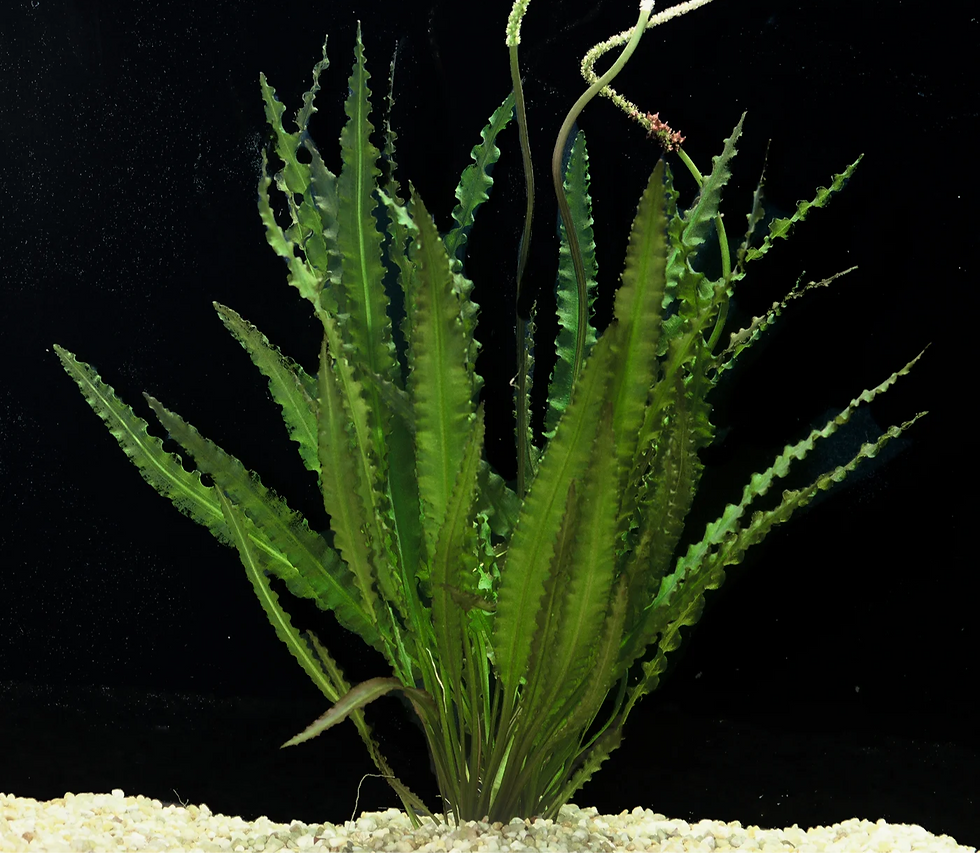
Table of Contents
1 Introduction and Taxonomy
Aponogeton crispus, commonly called the Ruffled Sword Plant or Crinkled Aponogeton, is a freshwater aquatic plant that has been a fixture in the aquarium hobby for decades. It is widely regarded as the most beginner-friendly member of its genus, tolerating a broad range of water conditions and requiring no CO2 injection to survive and grow. Its long, narrow leaves with distinctly wavy margins give it an immediately recognizable look that suits midground and background positions in medium to large aquariums.
The species is sold in enormous quantities worldwide, often as a dormant dry bulb, which makes it one of the most accessible aquarium plants available. Many specimens sold under this name are in fact hybrids, but both true A. crispusand its cultivated hybrids are useful, attractive plants.
Taxonomic Classification
Rank | Name |
Kingdom | Plantae |
Phylum | Streptophyta |
Class | Equisetopsida |
Subclass | Magnoliidae |
Order | Alismatales |
Family | Aponogetonaceae |
Genus | Aponogeton |
Species | Aponogeton crispus Thunb. |
Aponogeton is the only genus within the family Aponogetonaceae, which is recognized as a distinct family within the order Alismatales. The family contains roughly 50 species, all of which are obligate aquatics native to tropical and warm-temperate regions of Africa, Asia, and Australasia. The genus name is derived from an anagram of Potamogeton, a related genus of water plants.
The species was formally described and named by the Swedish botanist Carl Peter Thunberg in 1781. The species epithet crispus is Latin for "curled" or "wavy," a direct reference to the undulated margins of the leaves. Recognized synonyms include Spathium crispum (Thunb.) Voigt and Aponogeton echinatus Roxb., though neither is in current use.
A. crispus hybridizes readily with related species. The most commonly encountered hybrids in the aquarium trade are A. crispus × A. natans and A. crispus × A. undulatus, and the nursery-developed cross A. crispus × A. rigidifolius produced by Tropica. These hybrids are frequently sold simply as Aponogeton crispus, often without disclosure. True A. crispus develops leaves that are reddish-green to olive in color and never produces floating leaves; many green-leafed specimens offered for sale are hybrids. Most hybrids are sterile.
2. Summary Table of Ideal Care Parameters
Parameter | Ideal Range | Notes |
Difficulty | Easy to Medium | Highly adaptable; requires proper tuber placement and nutrient management to prevent rot and sustain large physical mass. |
Placement | Midground to Background | Grows to a maximum height of 25 to 50 cm; requires significant vertical space to prevent shading of understory plants. |
Lighting | Low to High (10-50+ PAR) | Modulates growth speed; higher intensities promote broader leaves and the expression of secondary coloration in specific cultivars. |
Temperature | 22–28 °C (72–82 °F) | Tropical thermal range; extreme deviations can trigger premature dormancy or induce metabolic stress. |
pH | 6.5–7.5 | Prefers slightly acidic to neutral water; this range maximizes the bioavailability of essential metallic micronutrients. |
General Hardness (GH) | 2–12 dGH | Prefers soft to moderately hard water; requires sufficient calcium and magnesium for cellular structure and photosynthesis. |
Carbonate Hardness (KH) | 3–8 dKH | Moderate buffering capacity is recommended to prevent rapid pH fluctuations while maintaining a soft water environment. |
TDS | 50-200 | Low concentration of dissolved solids is required to mimic the rain-fed conditions of its native seasonal pools. |
Water Flow | Low to Moderate | Replicates slow-moving streams; excessive mechanical flow can cause physical damage to the thin, translucent leaves. |
Substrate | Nutrient-Rich, Loose | Requires uncompacted media to allow fibrous root expansion and oxygenation around the tuber to prevent bacterial decay. |
CO2 | Low (Optional) | Injection is not strictly required but significantly accelerates vegetative growth and increases the frequency of flowering. |
Fertilization | Heavy Root, Moderate Liquid | Relies heavily on benthic nutrient reserves (root tabs) combined with liquid iron and micronutrients for optimal foliage color. |
Growth Rate | Fast | Capable of rapidly generating extensive foliage when provided with adequate macronutrients and high-intensity lighting. |
Propagation | Seeds | Achieved exclusively through the germination of seeds produced by emergent flowers; physical division of the tuber is lethal. |
Compatible Species | Community Fish, Shrimp, Snails | Firm leaf structure resists herbivory; suitable for most standard freshwater fauna and diverse macrophyte communities. |
Maintenance | Regular Pruning, Dormancy Care | Requires targeted removal of decaying outer leaves and specialized handling of the tuber during its natural resting phase. |
Common Issues | Tuber Rot, Melting, Algae | Burying the tuber completely causes suffocation and rot; environmental instability causes leaf melt; broad leaves attract algae. |
Cultivars | 'Red', 'Purple', 'Green' | Wild-type is green; tissue-cultured variants exhibit distinct pigmentation requiring specific lighting spectrums to express fully. |
3 Native Range and Geographic Distribution
The native geographic distribution of Aponogeton crispus is entirely restricted to the tropical regions of South Asia. Documented wild populations are primarily concentrated in Sri Lanka, India, and Bangladesh. This specific geographic footprint dictates the environmental parameters the plant has evolved to tolerate and rely upon.

In Sri Lanka, the species is widespread and highly integrated into the island's complex hydrological networks. It is predominantly found in the lowland wet zones and intermediate climatic zones. The topography of these areas features a dense matrix of slow-moving rivers, seasonal streams, and shallow depressions that collect water during the rainy season. Sri Lanka's climate is heavily influenced by the Southwest and Northeast monsoons, which create distinct wet and dry seasons. Aponogeton crispus has adapted to survive across these diverse micro-regions, from the shaded, tannin-stained forest streams of the southern provinces to the sun-exposed, slow-flowing waters of the western coastal plains.
In India and Bangladesh, the distribution extends across various river basins, floodplains, and seasonal marshlands. The plant occupies ecological niches that experience profound shifts in water volume and velocity. During the monsoon season, the rivers swell, and floodplains become inundated, providing a vast expanse of submerged habitat. Aponogeton crispus utilizes this period of abundant water and nutrient influx to engage in rapid vegetative growth and sexual reproduction.
The regional differences across South Asia mean that individual populations of Aponogeton crispus may exhibit slight phenotypic variations based on their localized environments. For instance, populations in fast-flowing Indian streams may develop narrower, more rigidly undulated leaves to cope with water resistance, whereas those in still, seasonal ponds in Bangladesh may develop broader foliage to maximize light capture.
Despite its wide natural distribution, the species faces environmental pressures. Habitat alteration due to agricultural expansion, the rerouting of natural waterways, and the collection of wild specimens for the ornamental plant trade impact native populations. However, the exact conservation status in the wild is currently buffered by the massive commercial aquaculture operations located globally, which supply the aquarium hobby through laboratory tissue culture and large-scale greenhouse cultivation, thereby reducing the necessity for wild harvesting.
4 Natural Habitat and Environmental Conditions
Habitat Type
In the wild, A. crispus occupies a range of standing and slow-flowing freshwater environments. Its most characteristic habitats are seasonal ponds and shallow lakes that fill during the wet monsoon season and may dry out partially or completely during the dry season. It also occurs in sluggish streams, irrigation channels, and marshy depressions. The plant is found at elevations from sea level to moderate altitudes in Sri Lanka and southern India.

Light Exposure
In natural settings, A. crispus typically grows in open or partially open water where it receives full to partial sun exposure for much of the day. Seasonal ponds in Sri Lanka are often free of dense overhead canopy, meaning the plant can receive high ambient light during the growing season. In deeper or more shaded locations, growth is slower and leaves tend to be longer and narrower. In these environments, the plant relies on these highly efficient, translucent leaves to capture lower intensities of light. This broad natural tolerance is the biological mechanism that allows the species to adapt to everything from low-output fluorescent aquarium fixtures to high-intensity LED systems.
The natural photoperiod in Sri Lanka is fairly consistent year-round, averaging approximately 11–13 hours of daylight.
Natural Substrate

The natural substrate in these South Asian aquatic ecosystems is typically composed of loose, fine-grained materials. The benthic layer is a complex mixture of laterite clay, organic mud, fine river sand, and decomposed leaf litter. This substrate profile is exceptionally dense in macronutrients and trace minerals. The high concentration of clay provides a high cation exchange capacity, trapping nutrients and making them available to the plant's roots.
Crucially, the substrate is generally uncompacted. The loose nature of the mud ensures that the plant's tuber is not subjected to crushing pressure and allows for adequate oxygen exchange, preventing anaerobic bacteria from rotting the storage organ.
The natural substrate in these South Asian aquatic ecosystems is typically composed of loose, fine-grained materials. The benthic layer is a complex mixture of laterite clay, organic mud, fine river sand, and decomposed leaf litter. This substrate profile is exceptionally dense in macronutrients and trace minerals. The high concentration of clay provides a high cation exchange capacity, trapping nutrients and making them available to the plant's roots. Crucially, the substrate is generally uncompacted. The loose nature of the mud ensures that the plant's tuber is not subjected to crushing pressure and allows for adequate oxygen exchange, preventing anaerobic bacteria from rotting the storage organ.
Water Quality
The surface waters of Sri Lanka and southern India where A. crispus grows are generally soft to moderately hard, slightly acidic to near-neutral in pH. Conductivity tends to be relatively low, reflecting the mineral-poor granitic and metamorphic geology of the region. In seasonal ponds, water quality fluctuates considerably over the course of a year: dissolved mineral content rises as water evaporates during the dry season, and the influx of fresh rainwater at the start of the monsoon rapidly dilutes the water and lowers conductivity and pH.
Water temperatures in these environments range from approximately 22°C to 30°C during the growing season, with cooler temperatures during the dry season when water levels are low or absent. Dissolved oxygen levels are generally adequate in moving water habitats but can be lower in stagnant seasonal pools.
Seasonality and Dormancy
The most important ecological feature of A. crispus's natural habitat is its seasonal drying. The monsoon cycle creates a predictable pattern of flooding and desiccation. The plant responds to the approach of the dry season by drawing resources back into its tuber and shedding its leaves. The dormant tuber persists in the drying substrate, remaining viable for months in a desiccated state. When the rains return and the habitat refills with water, the tuber resumes growth rapidly, sending out new leaves. This dormancy cycle is deeply embedded in the plant's biology and is replicated to varying degrees in aquarium specimens.
5 Morphological and Growth Characteristics
Growth Form and Habit
Aponogeton crispus is an obligate aquatic plant with a rosette growth habit. All vegetative leaves are fully submerged; the plant does not produce floating leaves, which distinguishes it from some other Aponogeton species. The inflorescence is the only structure that emerges above the water surface under normal conditions. The plant grows from a persistent tuber that anchors it to the substrate and serves as an energy reserve between growth cycles.
Submersed Form
The submersed form is the only vegetative form A. crispus naturally expresses. All leaves are produced underwater in a basal rosette arrangement. Under good conditions, a single established specimen can produce a dense cluster of 10–20 or more leaves, forming a substantial visual presence in the aquarium. Leaf density and size are directly linked to light availability, nutrient levels, and the age of the tuber within its growth cycle.
Emergent Form
The sole emergent structure in A. crispus is the flowering spike. When conditions are favorable — particularly after a period of stable, nutrient-rich conditions with adequate light — the plant sends up an erect, slender flower stalk that can reach up to 80 cm in height. This stalk rises through the water column and extends above the surface, bearing the inflorescence. This emergent flowering structure is an adaptation that facilitates wind and insect pollination in the open water habitats the plant occupies in the wild.

Tuber / Rhizome

The underground storage organ of A. crispus is a round, compact tuber (sometimes referred to as a rhizome in hobby literature, though it is technically more tuber-like in structure). It is 2–3 cm in diameter in young plants and can reach up to 5 cm in mature, well-established specimens. The tuber is firm, pale to cream-colored, and may have a slightly rough or corky exterior. It stores proteins, carbohydrates, lipids, and mineral nutrients that fuel the plant through dormancy and the early stages of re-growth. Roots emerge from the underside and lower sides of the tuber; the growing point and leaf bases emerge from the top. When planting, the top of the tuber must not be buried, as covering it promotes rot.
Roots
The root system is fibrous and relatively extensive, spreading laterally through the substrate from the base of the tuber. Roots are pale, moderately fine, and are the primary means by which the plant accesses substrate nutrients. A well-established plant in a nutrient-rich substrate will develop a substantial root mass that occupies a significant area around the tuber. This root system is one reason the plant benefits strongly from substrate fertilization.
Leaves
Leaves emerge from the growing point at the top of the tuber on individual petioles of variable length. Petiole length adapts to water depth, lengthening as necessary to position the leaf blade in the light zone. The leaf blade is linear-lanceolate (long, narrow, and tapering at both ends), typically 20–35 cm in length and up to 6 cm wide in cultivated specimens, though wild plants tend to be longer and narrower. The most distinctive feature of the leaf is its strongly undulated or ruffled margin — the edges of the leaf alternate between ridges and troughs along the entire length, giving the leaf a distinctly wavy, crinkled profile when viewed end-on or from above.
Leaf coloration varies. True A. crispus typically produces leaves in olive-green to reddish-brown tones, with the reddish coloration more pronounced in higher light. Many aquarium specimens, which are hybrids, show bright light green to mid-green leaves that may appear semi-translucent when lit from above. The leaf tissue is thin and somewhat delicate in appearance despite being reasonably tough in practice.
Flowers
Flowering in A. crispus is a sign of healthy, well-established growth. The flower stalk (peduncle) is erect and can reach up to 80 cm tall, rising above the water surface. The inflorescence is a single terminal spike (raceme) up to 18 cm long. Flowers are small and numerous, with a 2 mm perianth (usually white or faintly pink), and six stamens each. The flowers are lightly scented. A single flowering spike lasts 1–2 weeks. After pollination, each flower can produce a small follicle containing 1–4 seeds. Seeds are elliptical, approximately 5–6 mm long and 2 mm in diameter, with characteristic curved extensions that help anchor them in soft substrate upon germination.
Overall Size
A mature A. crispus in an aquarium typically reaches 25–50 cm in overall height from the top of the substrate to the tips of the longest leaves, depending on water depth and growing conditions. The spread of the leaf rosette can be 20–40 cm across in a well-fed, established specimen.
6 Ideal Water Parameters
Aponogeton crispus is tolerant of a wide range of water conditions, which is one reason it is recommended for beginners. However, it does have preferences, and meeting them will result in better growth, more consistent leaf production, and reduced likelihood of triggering premature dormancy.
Temperature
The ideal range is 20–28°C (68–82°F). The plant can tolerate temperatures as low as 15°C and as high as 32°C for limited periods, but sustained exposure to extremes stresses the plant. Cooler temperatures (around 18–22°C) may trigger or prolong dormancy, which can be exploited deliberately when resting the bulb. Higher temperatures above 28°C accelerate metabolism and nutrient demand.
pH
A. crispus grows best in slightly acidic to neutral water, with a pH of 6.5–7.5 being ideal. The true species performs optimally at the lower end of this range, around pH 6.5–7.0. Neutral to slightly alkaline water (pH 7.0–7.5) is acceptable for most hybrid forms. pH above 7.5 reduces CO2 availability and can inhibit nutrient uptake; if your water is naturally alkaline, CO2 injection becomes more important.
General Hardness (GH)
Soft to moderately hard water in the range of 3–10 dGH is preferred. The plant can adapt to harder water, but in high-GH environments, nutrient availability — particularly of some micronutrients — can become limited, and CO2 availability decreases as carbonate buffering increases.
Carbonate Hardness (KH)
A KH of 2–8 dKH is appropriate. Lower KH values allow dissolved CO2 levels to remain higher for a given amount of CO2 injection or natural CO2 production, which benefits photosynthesis. Very low KH (below 2 dKH) can lead to unstable pH, so some buffering is desirable.
TDS (Total Dissolved Solids)
A TDS of roughly 50–200 ppm reflects the moderately mineral-poor waters of its native range. Plants can adapt to higher TDS in established aquariums, but very high TDS associated with very hard, alkaline water is not ideal.
Water Flow
A. crispus does not require strong water movement. In its natural habitat, it typically grows in still or very slowly moving water. In the aquarium, gentle circulation from a filter return or sponge filter is sufficient. The main goal is to ensure good gas exchange and prevent water from becoming stagnant, while avoiding a strong direct current directed at the plant. A moderate, indirect flow works well.
Water Change Routine
Regular partial water changes (approximately 25–30% weekly or biweekly) are beneficial for maintaining water quality and replenishing trace elements and minerals. Stability is more important than perfect parameters — sudden large swings in pH, temperature, or hardness can stress the plant and trigger melting or premature dormancy.
7 Aquarium Lighting Requirements
Light Intensity and Photoperiod
A. crispus grows under moderate to high light in the wild, often in open water with considerable sun exposure. In the aquarium, it is one of the more adaptable plants in terms of light tolerance: it will survive under low-light conditions but grows slowly and produces fewer, longer, and less vivid leaves. Under moderate light (30–50 PAR at substrate level), growth is steady and the plant stays compact. Under high light (50–80+ PAR), growth accelerates, leaf coloration intensifies (particularly in red/purple forms), and the plant tends toward more compact and dense leaf production.
A daily photoperiod of 8–10 hours is appropriate. More than 10–12 hours of light per day tends to promote algae rather than improve plant growth. Less than 6–7 hours may not be sufficient to sustain vigorous growth. A consistent photoperiod is preferable over irregular schedules, which can stress the plant. Using a timer is strongly recommended.
Spectrum
A. crispus responds well to a full-spectrum light that covers the photosynthetically active radiation (PAR) range of approximately 400–700 nm. Lights that emphasize red wavelengths (around 650–680 nm) and blue wavelengths (around 440–470 nm) are particularly effective for plant growth. Red-spectrum light also tends to enhance the reddish coloration of some varieties. Standard incandescent or non-plant-specific fluorescent lighting lacks the spectral quality needed for reliable growth; LED plant lights or T5HO fluorescent fixtures with aquatic plant bulbs are much better choices.
White LEDs rated between 6500K and 8000K color temperature generally provide a good spectral balance for plant growth and produce a natural-looking aquarium appearance. Purpose-built planted tank LED fixtures that combine red and blue LEDs with full-spectrum white emitters tend to produce the best results.
Placement
A. crispus is a tall, background or midground plant, so the light source should be positioned overhead to illuminate the full height of the water column. Because mature plants can reach 30–50 cm tall and the leaf rosette can be substantial, ensure the light is strong enough to reach the substrate in the area where the tuber is planted. If the plant is positioned in the back of the tank, make sure light can reach it without being excessively shaded by taller hardscape or other plants. The long leaves themselves can cast shadow on smaller foreground plants, so consider this when designing the layout around the plant.
8 Substrate and Hardscape Preferences
The benthic environment is the foundation of successful Aponogeton crispus cultivation. Because the plant relies on a specialized tuber for energy storage and nutrient assimilation, the physical and chemical composition of the substrate, as well as the plant's interaction with surrounding hardscape materials, requires careful management.
Substrate Type
A. crispus is a heavy root feeder and extracts a significant proportion of its nutrients directly from the substrate through its extensive root system. The choice of substrate has a substantial effect on long-term plant health, particularly after the initial energy stored in the tuber is depleted.
A nutrient-rich, fine to medium-grained substrate is ideal. Aquarium-specific plant soils — such as products based on fired clay, volcanic soil, or amended peat — provide an excellent growing medium that buffers pH and supplies a range of macro- and micronutrients directly to the roots. These are the best option for a dedicated planted tank.
If you are using inert gravel or sand as a main substrate, A. crispus can still grow well provided you supplement with root tabs or fertilizer capsules placed directly in the substrate near the root zone. Refreshing these tabs every 2–3 months is important once the initial bulb energy reserves are consumed. A grain size of 2–4 mm for gravel is appropriate; very coarse gravel (above 6–8 mm) can prevent fine roots from penetrating and does not hold nutrients effectively.
Sand substrates work adequately for A. crispus provided nutrient supplementation is provided. Very fine sand (below 0.5 mm) can compact and become anaerobic, which may harm roots; medium sand (0.5–1 mm) is preferable and more root-friendly.
Clay-based substrates like Seachem Flourite or equivalent products are an intermediate option: they are inert in terms of nutrients but bind to nutrients in the water column and make them available to roots over time. They also have a natural appearance and do not require the lengthy cycling that some rich aquatic soils do. They are a strong choice if you want a planted tank look without the risk of an overly acidic substrate characteristic of some rich soils.
Planting Depth and Technique
When planting a bulb or tuber, insert it into the substrate so that only the lower two-thirds is buried. The top of the tuber — the growing point from which leaves emerge — must remain exposed above the substrate surface. Burying it completely is the most common mistake with this plant and frequently leads to rot. The roots should point downward into the substrate; if the bulb hasn't sprouted yet, the slightly flattened or pointed end is usually the growing tip.
Hardscape Compatibility
A. crispus has no specific hardscape requirements. It does not attach to rocks or driftwood the way epiphytic plants like Anubias or Java fern do. It works well in layouts with driftwood and stone, planted between or behind hardscape elements. The main consideration is ensuring the tuber has sufficient substrate depth and that surrounding hardscape does not physically restrict root expansion. The spreading root system can extend 15–20 cm from the base of the tuber in a well-established plant, so avoid placing hard-bottomed objects like flat stones directly over the root zone.
9 Fertilization and Nutrient Management
A. crispus is a nutrient-hungry plant, particularly after the energy reserves in the bulb are exhausted — typically 3–6 months after planting a dry bulb. After this point, consistent fertilization becomes important for sustained growth.
Substrate Fertilization
Root tabs or slow-release fertilizer capsules placed in the substrate near the root zone are the most effective method of fertilizing A. crispus. Because the plant draws heavily from the substrate, root tabs deliver nutrients directly where they are needed. Products containing a complete macro- and micronutrient profile (including iron, potassium, nitrogen, and phosphorus) work well. Insert root tabs approximately 5–8 cm from the base of the plant and replace them every 2–3 months, or according to the product manufacturer's instructions. In a moderately stocked fish tank with regular feeding, fish waste adds organic nutrients to the substrate over time, supplementing or partially replacing the need for root tabs in established setups.
Liquid Fertilization
Liquid fertilizers supplement water column nutrients and are useful for supporting not just A. crispus but all plants in a mixed planted tank. For A. crispus specifically, liquid fertilizers add trace elements and micronutrients that the plant also absorbs through its leaves. A balanced liquid fertilizer dosed according to instructions once or twice per week is appropriate for a low-tech setup. If you are running CO2 injection and higher lighting, nutrient demand increases and dosing may need to be more frequent.
Macronutrients
Nitrogen (in the form of nitrate, NH4, or organic compounds from fish waste), phosphorus, and potassium are the primary macronutrients required. In a well-stocked fish tank, nitrogen and phosphorus are typically available in adequate quantities from fish waste and uneaten food. Potassium is often the limiting macronutrient in aquariums and may need to be supplemented via liquid fertilizer even in well-stocked tanks.
Micronutrients
Iron is the most commonly deficient micronutrient in aquarium plants and causes yellowing between the leaf veins (interveinal chlorosis). A liquid fertilizer containing chelated iron (EDTA or DTPA iron) helps prevent this. Manganese, calcium, magnesium, and a range of other trace elements are also important for overall plant health.
CO2
A. crispus does not require CO2 injection to survive or grow at a basic level. In a low-tech setup with moderate lighting and a nutrient-rich substrate, it will grow adequately on dissolved CO2 from fish respiration and organic decomposition. However, CO2 injection measurably improves growth speed, leaf quality, and overall plant vigor, particularly under higher lighting. In harder water (above 8–10 dKH) where CO2 is less available, supplementation becomes more important. A target of 20–30 ppm dissolved CO2 is appropriate for a planted tank running this species.
Table: Common Nutrient Deficiency Symptoms in Aponogeton crispus
Deficient Nutrient | Physical Symptom | Rectification Method |
Nitrogen (N) | Older leaves turn yellow and dissolve; stunted overall growth. | Increase root tab density; dose liquid nitrogen supplements. |
Potassium (K) | Pinholes develop in older leaves, eventually leading to leaf disintegration. | Add potassium-specific liquid fertilizer or high-K root tabs. |
Iron (Fe) | New leaves emerge pale, yellow, or completely white (chlorosis); veins may remain green. | Dose liquid chelated iron; ensure pH is below 7.5 for bioavailability. |
Phosphorus (P) | Premature shedding of older leaves; cessation of flowering. | Incorporate phosphate-rich root tabs into the substrate. |
10 Tank Size, Planting, and Placement
The architectural dimensions of a mature Aponogeton crispus dictate specific spatial requirements within the physical confines of an aquarium. Proper planning regarding tank size and precise aquascaping placement is critical to maintaining a balanced ecosystem and preventing the plant from overwhelming the layout.
Minimum Tank Size
A. crispus is not well-suited to nano tanks. A minimum tank volume of approximately 75 liters (20 US gallons) is recommended, and a tall tank is preferable to a standard height one given the plant's vertical growth. In smaller tanks, the long leaves quickly dominate the visual space, shade other plants, and require more frequent pruning to manage.
For an optimal display, a tank of 100–200 liters (25–50+ gallons) with a water depth of at least 35–40 cm is ideal. This gives the plant enough vertical space to reach its full size without its leaves pressing against the water surface or folding over.
Placement in the Aquarium
A. crispus works best as a midground to background plant. In tanks up to about 45 cm tall, it can comfortably serve as a background specimen. In taller tanks (50 cm+), it may also work in the midground. Given the width of its mature leaf spread (up to 40 cm across), individual plants benefit from being spaced at least 20–30 cm apart from each other and from neighboring plants.
Position the plant toward the rear or sides of the tank where its tall leaves create visual depth without blocking the view of smaller foreground plants. It works particularly well when paired with lower-growing foreground and midground plants that can tolerate some shade, such as Cryptocoryne species or Anubias.
If planting multiple bulbs, space them at least 15–20 cm apart so their root systems and leaf spread do not compete excessively. Plant them at the same time if possible so their growth cycles stay roughly synchronized, which simplifies dormancy management.
Single vs. Multiple Plants
A single A. crispus can be a focal point in a smaller to medium aquarium. In larger setups, a group of 3–5 plants planted together in the background creates a lush, textured backdrop. The varied leaf lengths within a group give a natural, layered appearance.
11 Maintenance, Trimming, and Pruning
The long-term cultivation of Aponogeton crispus requires specific maintenance protocols. Unlike stem plants, which are maintained by simply cutting the tops off and replanting them, this rosette species requires targeted pruning techniques and specialized management of its biological dormancy cycles.
General Maintenance
A. crispus is a low-maintenance plant under normal conditions. The main ongoing tasks are removing aging or damaged leaves, monitoring for nutrient deficiencies, and managing the dormancy cycle when it occurs.
Leaf Removal
Individual leaves have a finite lifespan. As the plant matures, outer leaves gradually yellow and die back, especially during periods of lower nutrient availability or when the plant is approaching dormancy. Remove yellowing or dead leaves by cutting or pinching them off close to the base of the petiole where it meets the tuber. Do not pull leaves, as this risks disturbing the tuber or damaging the growing point. Removing dead leaves promptly prevents them from decomposing in the tank and releasing nutrients that can fuel algae growth.
Algae Management
The large, long-lived leaves of A. crispus can accumulate algae over time, particularly in aquariums with excess nutrients or where lighting exceeds plant demands. Spot-cleaning individual leaves by gently wiping them with a soft cloth or algae pad can help, though this risks mechanical damage to the thin leaf tissue. Managing algae growth through proper nutrient balance and lighting control is more sustainable than manually cleaning leaves. Algae-eating species (see Section 13) can help keep the leaf surface clean.
Managing Dormancy
Dormancy is the most involved aspect of A. crispus care. After an extended active growth period (typically 9–12 months, though this varies in aquarium conditions), the plant naturally slows leaf production, older leaves begin to yellow and die back, and eventually all foliage may be shed. At this point, several approaches are possible:
One option is to leave the tuber in the tank. The tuber will often re-sprout on its own after a rest period of a few weeks to several months, provided the substrate is not disturbed and the water chemistry remains stable. This is the simplest approach and works reasonably well in established tanks.
A more controlled approach is to remove the tuber, trim away all remaining leaves and roots, and store it in a cool, damp location — such as a small container of barely moist sand or peat — at a temperature of 15–18°C for 6–8 weeks. After this rest period, replant the tuber in the tank under the usual conditions. This method produces a more reliable and timely re-sprouting and is closer to the natural dormancy cycle the plant experiences in the wild.
12 Propagation Techniques
Multiplying Aponogeton crispus in the home aquarium requires an understanding of its reproductive biology. Because the plant grows from a centralized tuber with a single apical crown, propagation is achieved almost exclusively through generative (sexual) reproduction via seeds.
Seed Propagation
Seed propagation is the primary natural reproductive method for A. crispus and is the only method that produces genetically new plants. It is possible in the aquarium but requires some effort.
When a healthy plant flowers, the spike rises above the water surface. In the wild, pollination occurs via wind or insects. In the aquarium, you can hand-pollinate the flower spike by gently running a soft brush or cotton swab along the open flowers to transfer pollen. Alternatively, gently pressing two flowering spikes together, or using your fingertip to transfer pollen from one flower to another on the same spike, can initiate seed set. After pollination, the flowers develop small follicles containing seeds. These are ready to collect once the follicle begins to split or the seeds detach freely.
Seeds should be sown promptly after collection, as they lose viability quickly when dried. Scatter seeds over a shallow tray or propagator containing a fine substrate mixed with peat or aquatic plant soil, covered with a thin layer of water. Keep the setup at normal room temperature (22–26°C) and in a moderately lit location. Seeds may take several weeks to germinate. Leaves emerge before roots are visible; once clear roots have developed, seedlings can be transplanted into their final substrate.
Note that most specimens sold commercially as A. crispus are hybrids, and hybrid plants are typically sterile. Only the true species reliably produces viable seed.
Bulb/Rhizome Division
A mature tuber can occasionally be divided to produce additional plants, though this is less common and carries some risk. Division is only practical when the tuber has grown large enough to have developed clear secondary growing points. Using a clean, sharp blade, cut the tuber through these natural division points, ensuring each section retains at least one growing point and some roots. Dust the cut surfaces with activated carbon or powdered aquarium-safe charcoal to reduce the risk of infection. Plant each section as you would a normal bulb, with the growing point exposed.
This method is not as straightforward as with many other aquatic plants, and the success rate can be inconsistent. It is best attempted only on large, robust tubers in peak condition.
Dry Start Method
The Dry Start Method (DSM) is not applicable to Aponogeton crispus. This technique — which involves establishing plants in a humid, above-water environment before flooding the tank — is used primarily with small foreground or carpeting plants such as Hemianthus callitrichoides or certain mosses. A. crispus is an obligate aquatic with no meaningful emersed growth form; it does not produce leaves above water under normal conditions and should be kept fully submerged from the outset.
13 Compatibility with Aquatic Species
The robust physical characteristics and adaptable nature of Aponogeton crispus make it highly compatible with a broad spectrum of aquatic fauna and flora, allowing it to integrate seamlessly into diverse community ecosystems.
Fish
Aponogeton crispus is compatible with the vast majority of peaceful freshwater fish commonly kept in community aquariums. Its firm, moderately tough leaf texture makes it less vulnerable to nibbling than many soft-leaved plants. Small tetras, rasboras, corydoras, livebearers, rainbowfish, gouramis, dwarf cichlids, and similar species pose no threat to the plant.
Larger or more destructive fish should be avoided. Goldfish (Carassius auratus) are known to graze heavily on aquarium plants, including A. crispus, and will damage or consume leaves over time. Large herbivorous cichlids and silver dollars are similarly problematic. Large cichlids that dig substrate — such as Oscars or many Central American species — may uproot or damage the tuber through substrate disturbance, even if they don't eat the plant directly. These are not compatible tank mates.
Algae-eating fish such as Otocinclus, Siamese algae eaters (Crossocheilus oblongus), and bristlenose plecos (Ancistrusspp.) are beneficial companions: they graze algae from surfaces including the broad leaves of A. crispus, helping keep the plant looking clean. Hillstream loaches also perform this function. Be aware that very large plecos may scrape plant leaves while grazing, causing damage.
Invertebrates
Most freshwater shrimp — including neocaridina species (cherry shrimp and variants), caridina species (crystal shrimp, Amano shrimp), and ghost shrimp — are entirely safe with A. crispus. Shrimp graze biofilm and algae from leaf surfaces, providing a mild cleaning benefit without damaging the plant tissue.
Freshwater snails such as Nerite snails, Mystery snails (Pomacea bridgesii), and Ramshorn snails are also compatible. Nerite snails in particular are useful for grazing algae from leaf surfaces. Bladder snails and Malaysian trumpet snails (MTS) are harmless to the plant and actively benefit the substrate by aerating it, which is good for root health. The main concern with snails is population explosions of pest species, which are managed by controlling food supply rather than by removing the plant.
Other Plants
A. crispus is compatible with virtually all other freshwater aquarium plants and does not produce allelopathic compounds that inhibit neighboring plants. The main compatibility consideration is physical: its tall, spreading leaf canopy can shade plants positioned nearby. Low-light-tolerant species such as Anubias, Cryptocoryne, Java fern (Microsorum pteropus), and Java moss do well in the partial shade cast by the plant's leaves. Taller background plants such as Vallisneria, Sagittaria, and other Aponogeton species can coexist well at the same vertical level without shading conflicts.
Avoid planting very small, light-demanding foreground plants — such as Hemianthus callitrichoides or glossostigma — directly in front of a large A. crispus where they will be shaded out. In a well-planned layout, position the A. crispusbehind all foreground and midground specimens to avoid light competition.
13 Common Cultivation Challenges and Troubleshooting
While Aponogeton crispus is classified as a relatively resilient and easy-to-grow species, aquarists may encounter specific physiological and environmental challenges during cultivation. Rapid identification and targeted troubleshooting of these issues are necessary to maintain the plant's health.
Dormancy Leaf Drop
The most frequently encountered issue with A. crispus is sudden or progressive leaf loss. When the plant has been growing actively for 9–12 months, or when it has recently flowered and set seed, it often enters a dormancy phase in which it stops producing new leaves and existing leaves yellow and die. This is entirely normal and should not be mistaken for a disease or care failure.
If leaf loss occurs after a long productive period or after flowering, allow the plant to rest. Either leave the tuber in the tank or remove it for controlled dormancy storage (see Section 11). If the plant re-sprouts within a few weeks to months, the tuber was simply cycling through dormancy.
Melting After Planting
Newly purchased plants may lose some or most of their leaves shortly after being introduced to the tank. This is known as "melt" and is caused by the transition from the conditions under which the plant was grown commercially — often emersed in very humid nursery conditions — to fully submerged aquarium life. In the case of bulbs sold dry, it may simply be the first period of rehydration and growth. Melting is normal and temporary. As long as the tuber remains firm and unblemished, new leaves will emerge. Do not remove the tuber during melt unless the tuber itself becomes soft and mushy.
Yellowing Leaves
Uniform yellowing across multiple leaves often signals a nutrient deficiency. The most likely causes are insufficient iron (interveinal chlorosis — yellowing between leaf veins while veins remain green), nitrogen deficiency (overall pale or yellow color, starting with older leaves), or potassium deficiency (brown or yellow edges with possible holes in leaves). Address these by adding appropriate root tabs, adjusting liquid fertilizer dosing, or reviewing the substrate's nutrient content.
If only older leaves are yellowing while new leaves appear healthy and green, this is a natural process of leaf senescence and is not a problem.
Stunted Growth or No New Leaves
Lack of new leaf production outside of dormancy most commonly indicates insufficient nutrients, inadequate light, or a substrate that is too compact or anaerobic. Check that root tabs are present and current, verify that the light is providing adequate PAR, and inspect the substrate for compaction or the presence of black, foul-smelling anaerobic zones near the roots. In hard, high-pH water, adding CO2 can unlock growth that was previously limited by CO2 availability.
Algae on Leaves
Green spot algae, green dust algae, and black brush algae can all colonize the broad leaves of A. crispus, particularly in tanks with an imbalance between light, CO2, and nutrients. Reducing lighting duration or intensity, improving CO2 availability, and adding algae-eating fish or shrimp are the most effective responses. Manual removal of algae from leaves is possible but should be done gently. If black brush algae (BBA) is a persistent problem, a brief treatment with liquid carbon (glutaraldehyde-based products like Excel) spot-applied to affected areas can help.
Soft or Rotting Tuber
A soft, discolored, or foul-smelling tuber indicates bacterial rot, most commonly caused by planting the tuber too deep (covering the growing point), physical damage to the tuber during planting, or anaerobic substrate conditions. Remove the tuber from the tank and cut away all affected tissue until you reach firm, healthy material. Treat the cut surfaces with a dilute potassium permanganate solution or powdered activated carbon and allow them to dry for an hour before replanting. If more than half the tuber is affected, recovery is unlikely.
Pests and Pathogens
A. crispus is generally resistant to common aquatic plant pests. Snail eggs or pest snails may hitchhike on new plants; a brief quarantine soak in a dilute potassium permanganate solution before introduction to the main tank is a precautionary measure. Hydra and planaria occasionally become a problem in shrimp tanks but do not directly attack plant tissue. Cyanobacteria (blue-green algae) can coat leaves in poorly circulated tanks with excess nutrients; improving flow and reducing nutrients addresses this.
14 Varieties and Cultivars
The enduring popularity of Aponogeton crispus in the global aquarium trade has incentivized intense selective breeding and commercial aquaculture efforts. These endeavors have resulted in several distinct, highly sought-after cultivars that offer alternative aesthetics and color profiles compared to the standard wild-type plant.
Table: Comparison of Aponogeton crispus Cultivars
Cultivar | Leaf Coloration | Max Height | Lighting | Availability |
'Green' (Wild-Type) | Pale to Dark Green | 50 cm | Low to High | Widely available as dry bulbs. |
'Red' | Burgundy to Light Red | 40 cm | Medium to High | Moderate; primarily tissue culture. |
'Purple' | Green turning deep Purple | 50 cm | High | Rare; traded among hobbyists. |
True Species
The true Aponogeton crispus is less commonly available in the hobby than its hybrids. Authentic specimens are identified by their reddish-green to olive-brown leaf coloration, narrower leaf blades, and the fact that they do not produce floating leaves. True A. crispus tends to require a more consistent dormancy cycle than hybrids and is more particular about water softness and slight acidity.
Hybrid Forms in Trade
The majority of plants sold as Aponogeton crispus in aquarium shops and online are hybrids. These are typically crosses with A. natans or A. undulatus and were developed by commercial nurseries for ease of cultivation, more vivid leaf color, reduced dormancy requirements, and greater adaptability to a range of water conditions. These hybrids typically display bright green, more transparent leaves that are somewhat wider than the true species. Many of these hybrid forms are sterile and will not produce viable seed.
The most important cultivated hybrids include:
A. crispus × A. natans — One of the most common forms in trade. Produces bright green, translucent leaves with pronounced ruffled margins. Generally easier to maintain in harder water than the true species.
A. crispus × A. undulatus — Another widely sold hybrid, often displaying slightly broader leaves with strong undulation. May produce floating leaves in shallow water, a trait inherited from A. undulatus.
A. crispus × A. rigidifolius — Developed by the Danish nursery Tropica, this cross combines the ruffled aesthetics of A. crispus with the robustness of A. rigidifolius. It is more tolerant of varying conditions and typically does not require a dormancy period, making it particularly suited to permanent aquarium planting.
Purple and Red Forms
Select cultivars with deeper reddish-purple leaf coloration are available from specialty aquatic plant vendors. These forms are typically hybrids that express enhanced anthocyanin pigmentation. Coloration intensifies under higher light levels and with good iron availability. These red or purple forms are particularly striking when grown under suitable conditions and are increasingly popular in aquascaping.
15 Commercial Availability and Sourcing
Aponogeton crispus and its hybrids are among the most widely available aquarium plants in the world. They are found in nearly every retail aquarium shop that carries live plants, typically sold in one of several forms:
Dry Bulbs
The most common retail format, particularly in mass-market pet stores. Bulbs are sold in sealed plastic bags, sometimes mixed with other Aponogeton species or unrelated bulbs under generic names such as "Assorted Aquarium Bulbs" or "Wonder Bulbs." These products are often inexpensive and require no special handling for transport. Germination rate from dry bulbs is high, provided the bulb is firm and undamaged at purchase.
Tissue Culture (TC) Cups
Increasingly available from specialty planted tank retailers, TC A. crispus is grown in sterile agar medium and is free of pests, pathogens, and algae. Tissue culture plants are young and small but pest-free, which is a significant advantage for pristine setups or shrimp tanks where introducing contaminants is a concern.
Potted or Bunched Plants
Many aquatic nurseries sell A. crispus as established plants in small nursery pots, often with the tuber already actively growing. These are more expensive than dry bulbs but establish more quickly and reliably.
Online Specialty Vendors
A wider range of forms — including the true species, specific named hybrids, and colored cultivars — is available through online aquatic plant retailers and planted tank hobbyist forums and marketplaces. Sourcing from reputable vendors with good reviews is important; poorly stored bulbs or mislabeled plants are common issues in less reputable channels.
Import Restrictions
Because A. crispus is a protected species in Sri Lanka, importation of wild-collected specimens is illegal in many countries. Commercial specimens are almost universally nursery-propagated, primarily in Southeast Asian and European growing facilities, and are legal to purchase. When buying from any source, selecting nursery-grown plants over wild-collected specimens supports sustainable practice and legal compliance.
16 Conclusion
Aponogeton crispus is a dependable, visually appealing aquarium plant that suits a wide range of setups, from basic community tanks to more thoughtfully planned planted aquascapes. Its tolerance for low-tech conditions — no CO2 injection required, adaptable to a range of water parameters, capable of growing in inert substrates with root tab supplementation — makes it one of the most accessible choices for aquarists of any experience level.
The key to long-term success with this plant comes down to a few consistent practices: ensuring the tuber is never buried to its growing point, providing adequate light and root-zone nutrition, and understanding and managing the natural dormancy cycle. Most of the challenges encountered with A. crispus trace back to one of these three factors.
The widespread availability of hybrid forms means that many aquarists will grow crosses rather than the true species, and for most purposes this is entirely appropriate. Hybrids are generally more adaptable and require less dormancy management than true A. crispus, making them the practical choice for casual cultivation. True A. crispus is worth seeking out for aquarists interested in the authentic species or in attempting seed propagation.
With its distinctive ruffled leaves, manageable size, and forgiving nature, A. crispus remains one of the most worthwhile aquarium plants available at any price point.


Comments