


Asian Watermoss: Caring for Salvinia cucullata

Aquarium Plant Care Sheet
:
This care sheet provides information necessary for successfully nurturing Salvinia cucullata, helping aquarists to maintain and grow this species successfully.

Table of Contents
Introduction and Taxonomy
The cultivation of aquatic pteridophytes a special niche within the broader discipline of aquascaping and aquatic horticulture. Among the diverse range of floating ferns utilized in modern freshwater aquariums, Salvinia cucullata, commonly called Asian Watermoss or Hooded Salvinia, occupies a distinguished position. It's celebrated not merely for its decorative value but for its unique architectural morphology—specifically the cup-like, "cucullate" foliage—which differentiates it sharply from its congeners. Unlike the globally proliferative and invasive Salvinia molesta or the ubiquitous Salvinia minima, S. cucullata presents a manageable growth habit and a distinct aesthetic that resembles a honeycomb lattice when mature, offering a unique textural element to the aquatic surface.
Taxonomic Classification and Phylogeny
Salvinia cucullata is a member of the family Salviniaceae, a specialized group of heterosporous, free-floating aquatic ferns. The taxonomy of this family has been subject to considerable revision, yet modern molecular phylogenetics firmly places the genus Salvinia within the order Salviniales. This order is of significant evolutionary interest as it includes the only two genera of heterosporous ferns that have fully adapted to an aquatic existence: Salvinia and Azolla (mosquito ferns). This phylogenetic relationship underscores a shared evolutionary trajectory characterized by the reduction of vegetative structures, such as the loss of true roots, and the development of specialized adaptations for buoyancy and rapid nutrient sequestration from the water column.
The genus Salvinia was established in honor of Anton Maria Salvini, a 17th-century Italian naturalist, by the French botanist Jean-François Séguier in 1754. The specific epithet cucullata is derived from the Latin cucullus, meaning "hood," a direct morphological reference to the plant's most defining feature: the upward and inward curling of the floating fronds to form a distinct cup.
Taxonomic Hierarchy:
Kingdom: Plantae
Phylum: Tracheophyta (Vascular Plants)
Class: Polypodiopsida (Ferns)
Order: Salviniales
Family: Salviniaceae
Genus: Salvinia
Species: Salvinia cucullata Roxb. ex Bory.
Distinguishing Salvinia cucullata from Congeners
A critical aspect of cultivating Salvinia cucullata is the ability to distinguish it from related species, particularly Salvinia molesta (Giant Salvinia) and Salvinia minima (Water Spangles). Misidentification is common in the trade due to the superficial similarities of juvenile plants. However, microscopic and macroscopic analysis of the trichomes (hairs) on the adaxial (upper) leaf surface reveals definitive diagnostic characteristics.
The trichomes of Salvinia species are categorized into four distinct morphological types based on their complexity. Salvinia cucullata is characterized by "Cucullata-type" trichomes. These are multicellular, uniseriate (single row of cells) hairs that are relatively simple in structure. Crucially, the tips of these trichomes are distinct and not joined at the apex. This stands in stark contrast to Salvinia molesta, which possesses highly specialized "egg-beater" trichomes. In S. molesta, four hairs are grouped on a single stalk and fused at the tips to form a cage-like, superhydrophobic structure. Salvinia minima, while also lacking the fused tips of S. molesta, typically features hairs that branch into four distinct strands but remains morphologically distinct in its leaf shape, which is generally flat or slightly folded rather than deeply hooded.
Understanding these distinctions is not merely an academic exercise but a practical necessity. Salvinia molesta is a federally regulated invasive weed in numerous jurisdictions due to its aggressive growth and ecological disruption capabilities. Salvinia cucullata, while monitored, generally poses a lower risk in temperate regions and is permitted in the aquarium trade, though it remains a weed of concern in its native tropical range.
Summary Table of Ideal Care Parameters
The successful cultivation of Salvinia cucullata requires adherence to specific environmental parameters that mimic its natural tropical habitat. The following table synthesizes the optimal ranges for these variables to ensure robust vegetative growth and the development of the characteristic hooded morphology.
Parameter | Ideal Range / Condition | Physiological Context |
Difficulty Level | Easy to Moderate | "Easy" if flow is low; "Moderate" due to sensitivity to condensation/lids. |
Placement | Surface Floating Only | Obligate epineuston (surface dweller); submersion leads to rapid necrosis. |
Lighting | Moderate to High (PAR >50) | High light essential for "hooding" response; low light causes flat, leggy growth. |
Temperature | 20°C – 28°C (68°F – 82°F) | Obligate tropical; metabolic shutdown occurs <15°C; thrives in heat. |
pH | 6.0 – 7.5 | Prefers circumneutral to slightly acidic chemistry; facilitates micronutrient uptake. |
General Hardness (GH) | 3 – 12 dGH | Adaptable; calcium required for cell wall rigidity; magnesium for chlorophyll. |
Carbonate Hardness (KH) | 3 – 8 dKH | Provides pH stability; plant is indifferent to carbonate levels directly. |
TDS | 100 – 300 ppm | Tolerates a wide range but prefers clean water with moderate dissolved solids. |
Water Flow | Stagnant to Low | Critical Factor. Surface agitation causes physical damage and drowning (wetting event). |
Substrate | N/A (Floating) | Benefits from nutrient leaching if active soil is used in the tank below. |
CO2 | Not Required / Redundant | Accesses atmospheric CO2 exclusively; water column CO2 is irrelevant. |
Fertilization | Water Column (Nitrates/Phosphates) | Absorbs via submerged modified fronds; rapid consumer of dissolved nitrogen. |
Growth Rate | Fast to Very Fast | Can double biomass in 7–10 days under eutrophic conditions. |
Propagation | Vegetative Fragmentation | Asexual division of rhizome is primary; sexual reproduction (spores) rare in aquaria. |
Compatible Species | Betta, Shrimp, Gourami | Excellent for labyrinth fish; incompatible with Goldfish or large Cichlids. |
Maintenance | Weekly Thinning | Must remove 30-50% weekly to prevent self-shading and decay. |
Common Issues | Melting / Condensation Rot | Leaves rot if tops remain wet from lid condensation or splashing. |
Cultivars | Wild Type Only | No commercially established variegated or dwarf cultivars exist; often confused with S. minima. |
Native Range and Geographic Distribution
Salvinia cucullata is an Old World species with a distribution strictly confined to the tropical zones of South and Southeast Asia. Unlike its cousin Salvinia molesta, which originated in the neotropics (South America) and became a pantropical invader, S. cucullata evolved in the monsoon-regulated wetlands of the Asian continent.
Core Native Regions
The primary native range extends from the Indian Subcontinent eastward through Indochina and into the Malay Archipelago.
India: The species was first described from specimens collected in India, which serves as the type locality. It is prevalent in the freshwater wetlands of West Bengal and other eastern states.
Thailand: In Thailand, the plant is ubiquitous in the central plains and is locally known as Chok hu nu (Mouse Ear Water Lettuce). It colonizes natural marshes as well as artificial water bodies created for agriculture.
Southeast Asia: Its range encompasses Vietnam, Cambodia, Indonesia, and Malaysia. In these regions, it is a dominant component of the floating aquatic flora.

Invasive Status and Global Spread
While S. cucullata is not as aggressively invasive on a global scale as S. molesta, it possesses weedy characteristics that have led to its classification as a pest in certain agricultural contexts within its native range.
Weed Ecology: It is cited as a principal weed in Indonesia and Thailand, particularly in rice paddy cultivation. The dense mats formed by the fern can shade out young rice seedlings and compete for dissolved nutrients in the paddy water.
Vector for Disease: In Sri Lanka, dense infestations of S. cucullata have been identified as breeding grounds for the Mansonia mosquito, a vector for filariasis. The larvae of this mosquito attach to the submerged roots of the fern to obtain oxygen, highlighting the plant's broader ecological and public health implications.
Absence in Pacific Islands: Interestingly, reports indicate that S. cucullata is not currently established on major Pacific Islands such as Hawaii or Fiji, contrasting sharply with S. molesta, which has devastated ecosystems in those regions. This suggests a potentially narrower ecological amplitude or less successful dispersal mechanisms compared to the giant salvinia.
Natural Habitat and Environmental Conditions
To successfully cultivate Salvinia cucullata, one must reconstruct the environmental variables of its natural habitat. The species is an ecological specialist of lentic (still) freshwater ecosystems characterized by high temperatures and nutrient loads.
Hydrology and Water Dynamics
In the wild, S. cucullata thrives in environments where water movement is negligible.
Rice Paddies and Marshes: These anthropogenic and natural wetlands provide shallow, stagnant water that heats up rapidly under the tropical sun. The lack of current allows the delicate, air-filled rhizomes to spread without mechanical fragmentation or submergence.
Eutrophic Conditions: The habitats frequented by S. cucullata, such as drainage ditches and agricultural runoff zones, are often eutrophic—rich in dissolved nitrogen and phosphorus. This evolutionary background explains the plant's high demand for nitrates in the aquarium and its utility in nutrient export.
Climatic Adaptations
The physiology of S. cucullata is attuned to the tropical monsoon climate.
Thermal Regime: The ambient water temperatures in its native range consistently remain between 20°C and 30°C (68°F – 86°F). The plant lacks mechanisms to tolerate freezing or prolonged chilling. Exposure to temperatures below 15°C (59°F) triggers metabolic dormancy and eventual necrosis.
Solar Radiation: In its natural habitat, the plant is exposed to full, unshaded solar radiation. The intensity of the tropical sun has driven the evolution of its "hooded" morphology and dense trichome coverage. These features function as a sunscreen, protecting the photosynthetic tissues from photo-inhibition and UV damage while simultaneously reducing water loss through transpiration.
Water Chemistry Fluctuations: The species is adapted to fluctuations in water chemistry typical of seasonal wetlands. As water levels drop during the dry season, dissolved mineral concentrations increase. Consequently, S. cucullata can tolerate a range of general hardness (GH) and pH levels, provided they do not veer into extreme alkalinity or acidity.
Morphological and Growth Characteristics
The morphology of Salvinia cucullata is a masterclass in evolutionary adaptation to the air-water interface. Every structural element, from the leaf shape to the microscopic hairs, serves a specific function in buoyancy, stability, or nutrient acquisition.
Frond (Leaf) Architecture
The genus Salvinia exhibits a unique heterophyllous (different leaf types) anatomy. The leaves are arranged in trimerous whorls (groups of three) along the rhizome.
Floating Fronds: Two leaves in each whorl are green, photosynthetic, and float on the water surface.
Cucullate Shape: In S. cucullata, these leaves are broadly ovate to wider-than-long, measuring up to 1.2 cm. The definitive feature is the upward curling of the leaf margins to form a hood or cup. This shape increases the structural rigidity of the leaf and may help in trapping humid air around the stomata.
Aerenchyma: The internal tissue of the leaf is composed of aerenchyma—a spongy tissue with large air spaces. This provides internal buoyancy, supplementing the surface tension provided by the hairs.
Submerged Fronds: The third leaf in the whorl is submerged, finely dissected into filiform (thread-like) segments, and lacks chlorophyll.
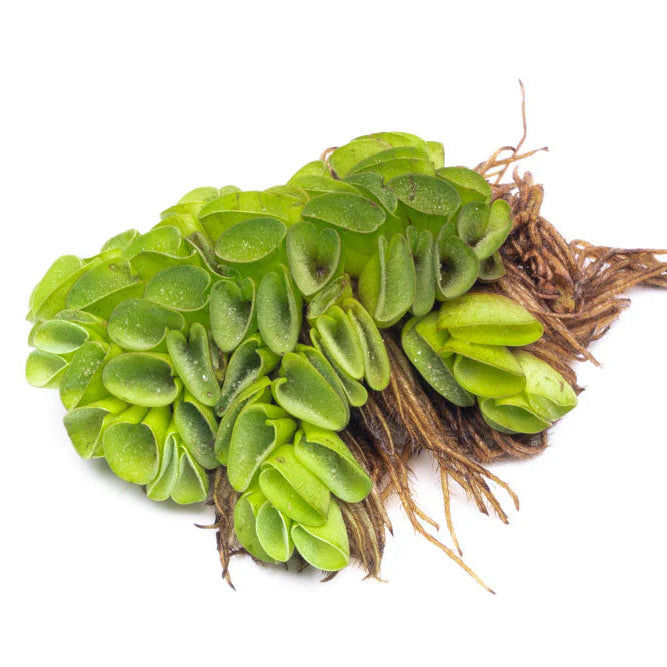
The "Root" Myth: While these structures function and appear exactly like roots, they are anatomically modified leaves. Salvinia is a rootless genus. These submerged fronds perform the vital roles of nutrient absorption and stabilization, acting as a keel to prevent the plant from capsizing.
Trichome Physics and the "Salvinia Effect"
The upper surface of the floating leaves is densely covered with trichomes (hairs) that render the surface superhydrophobic. This phenomenon, known as the "Salvinia Effect," allows the plant to retain a layer of air even when submerged.
Trichome Structure: As detailed in the taxonomy section, S. cucullata features simple, uniseriate trichomes where the tips are free. This contrasts with the complex "egg-beater" trichomes of S. molesta, which trap air more effectively under high pressure.
Hydrodynamic Function: The trichomes prevent water from wetting the leaf surface. This is critical because gas exchange occurs through stomata on the upper surface. If the leaf were to become wet (wetted), the water film would block CO2 and O2 exchange, causing the plant to suffocate and rot. The air layer retained by the trichomes ensures that the stomata remain dry and functional.
Stability: The air layer also adds buoyancy. However, because S. cucullata lacks the fused tips of the "egg-beater" design, its air retention is less robust against strong turbulence compared to S. molesta. This explains why S. cucullata is more prone to "melting" if subjected to constant splashing or splashing from filter outlets.
Sporocarps and Reproduction
Salvinia species are heterosporous, producing two types of spores.
Sporocarp Formation: The spores are contained within sporocarps—globose structures that develop in chains on the submerged, root-like leaves.
Dimorphism: The plant produces smaller microsporocarps (containing male microspores) and larger megasporocarps (containing female megaspores).
Aquarium Rarity: In the aquarium environment, sporocarp formation is uncommon. The plant relies almost exclusively on vegetative propagation. Even when sporocarps are produced, sexual reproduction is rarely successful due to the lack of specific environmental triggers (such as drought cycles) required to release and germinate the spores.
Ideal Water Parameters
While Salvinia cucullata is robust, maintaining specific water chemistry parameters is essential for preventing physiological disorders such as chlorosis (yellowing) or tissue necrosis.
pH Chemistry
Optimal Range: 6.0 – 7.5.
Physiological Impact: The plant prefers slightly acidic to neutral water. In this pH range, essential micronutrients, particularly iron and manganese, are most soluble and available for uptake by the submerged fronds.
Tolerance Limits: It can tolerate pH levels as low as 5.5 (typical of blackwater habitats) and as high as 7.8. However, sustained alkalinity (> pH 8.0) often leads to nutrient lockout, specifically iron deficiency, manifesting as interveinal chlorosis in new leaves. Conversely, extreme acidity (< pH 5.0) can damage the cellular integrity of the submerged fronds.
Temperature Constraints
Optimal Range: 20°C – 28°C (68°F – 82°F).
Metabolic Response: S. cucullata is an obligate tropical species. Its metabolic enzymes function optimally in warm water. It is an excellent candidate for Discus tanks or other high-temperature setups (up to 30°C/86°F), provided humidity is managed.
Cold Sensitivity: Exposure to temperatures below 18°C slows growth significantly. At temperatures approaching 10°C-15°C, the plant enters a state of dormancy or death. It is not suitable for unheated ponds in temperate climates.
Hardness and Mineral Content
General Hardness (GH): 3 – 12 dGH. The plant utilizes calcium for cell wall structure and magnesium as the central atom in the chlorophyll molecule. Extremely soft water (0 dGH) requires remineralization to prevent structural weakness and pale growth.
Carbonate Hardness (KH): 3 – 8 dKH. While the plant does not utilize carbonates directly for carbon (preferring atmospheric CO2), a moderate KH buffers the water against pH crashes, providing the stability that Salvinia favors.
Nitrogenous Compounds
Ammonia/Nitrate Uptake: S. cucullata has a high affinity for ammonium (NH4+) and nitrate (NO3-). It is a "nitrogen sponge," capable of rapidly lowering nitrate levels in the aquarium. This makes it invaluable for maintaining water quality but also means it can starve in ultra-low nutrient environments (oligotrophic tanks).
Aquarium Lighting Requirements
Lighting is the single most influential variable governing the morphology and growth rate of Salvinia cucullata. As a surface plant, it is adapted to high-intensity solar radiation, and its "hooded" form is a direct photomorphogenic response to light intensity.
Intensity and Photomorphogenesis
High Light (PAR > 100 µmol/m²/s): Under high-intensity lighting, the plant exhibits its most desirable form. The leaves remain small, thick, and curl tightly into the characteristic "cup" or "hood." The internodal distance on the rhizome shortens, resulting in dense, compact mats that resemble a honeycomb. The coloration becomes a vibrant, lighter green.
Moderate Light (PAR 50-100 µmol/m²/s): The plant will grow healthily but may exhibit a flatter leaf structure. The "hoods" will be more open, and the texture less compact.
Low Light (PAR < 50 µmol/m²/s): In low light, S. cucullata undergoes etiolation. The leaves flatten completely to maximize surface area for photon capture. The rhizome lengthens, making the plant appear "leggy" and sparse. Long-term exposure to low light weakens the plant, leading to shedding of roots and eventual disintegration.
Spectrum and Source
Spectrum: A full-spectrum daylight source (5000K – 7000K) is optimal. This spectrum mimics the sun and supports balanced photosynthesis.
Light Source: LED fixtures are the preferred technology. They provide high PAR values without the intense radiant heat of Metal Halide or T5 fluorescent bulbs.
Distance to Water: While S. cucullata thrives in warm water, its leaves can be scorched by direct contact with hot bulbs. LEDs should be positioned at least 4-6 inches above the water surface to prevent thermal burns and to allow for adequate heat dissipation.
Photoperiod
Duration: A photoperiod of 8 to 12 hours is recommended. Consistency is key; using a timer ensures a regular day/night cycle, which is essential for the plant's respiratory and photosynthetic rhythms.
Substrate and Hardscape Preferences
As a strictly free-floating species, Salvinia cucullata has no physical connection to the substrate or hardscape. However, the choice of substrate and the arrangement of hardscape significantly influence its environment and nutrient availability.
Substrate Interactions (Nutrient Leaching)
While the plant does not root in the soil, it interacts with the water column chemistry, which is often dictated by the substrate.
Active Soils (Aquasoils): Soils that leach ammonia and nitrogenous compounds (e.g., ADA Amazonia) are highly beneficial for S. cucullata. The plant acts as a biological filter, absorbing the excess ammonia leached by new soils during the cycling phase. This prevents algae blooms and protects fauna from ammonia toxicity.
Inert Substrates (Sand/Gravel): In tanks with inert substrates, the water column typically holds fewer nutrients. In such setups, the aquarist must rely on fish waste or liquid fertilization to feed the Salvinia. Without supplementation, the plant may exhibit slow growth or chlorosis.
Hardscape as Flow Management
The arrangement of driftwood and rocks can be utilized to manage surface flow, which is critical for Salvinia.
Baffling Flow: Tall hardscape elements that break the water surface can create "dead spots" or calm zones protected from the filter current. These zones are ideal for anchoring clumps of Salvinia, preventing them from being churned around the tank.
Shading Effects: S. cucullata creates dense shade. Hardscape layout should account for this; low-light plants like Anubias or Microsorum (Java Fern) should be positioned directly under the floating mats, while high-light plants should be placed in open areas.
Fertilization and Nutrient Management
Salvinia cucullata is a rapid grower with a voracious appetite for nutrients. Because it is disconnected from the substrate, it relies entirely on water column fertilization (foliar feeding is not applicable as the leaves are hydrophobic).
Macronutrient Requirements
Nitrogen (N): Nitrogen is the primary driver of vegetative growth. S. cucullata prefers nitrates but will also consume ammonium. In nitrogen-limited systems, the older leaves will yellow and decay prematurely as the plant translocates mobile nitrogen to new growth. Regular dosing of a nitrate-rich fertilizer is often necessary, especially in planted tanks with low fish stocking.
Phosphorus (P): Essential for the development of the submerged root-like fronds and for energy transfer (ATP). A deficiency typically results in stunted root systems and dark, bluish-green leaves.
Potassium (K): Potassium regulates stomatal opening and enzyme activity. Deficiency manifests as pinholes in older leaves and yellowing margins.
Micronutrient Requirements
Iron (Fe): Iron is critical for chlorophyll synthesis. Because Salvinia grows rapidly, it can quickly deplete available iron, leading to chlorosis (yellowing) of the new leaves. A chelated iron supplement acts as a color enhancer, ensuring the leaves remain a rich, vibrant green.
Trace Elements: Magnesium, Calcium, and other trace minerals are typically supplied by the water's hardness or comprehensive fertilizers.
The "Walstad" and "Low-Tech" Context
Walstad Method: In natural planted tanks (Walstad method), S. cucullata is a "siesta" plant—it competes with algae for nutrients and atmospheric CO2. It is highly recommended for these setups because it stabilizes the water chemistry by absorbing excess nutrients generated by the decomposing soil layer. Its "aerial advantage" allows it to thrive where submerged plants might be CO2-limited.
Fertilization Schedule: In high-tech tanks, daily or every-other-day dosing (EI method or similar) is preferred to maintain constant nutrient availability. In low-tech tanks, weekly dosing after water changes is usually sufficient.
Tank Size, Planting, and Placement
Tank Compatibility
Nano Aquariums: S. cucullata is an excellent choice for nano tanks (under 10 gallons). Its root-like fronds are relatively short (1-2 inches) compared to the long, trailing roots of Pistia stratiotes (Water Lettuce) or Limnobium laevigatum (Amazon Frogbit), which can clutter a small tank. The scale of the "hooded" leaves is proportionate to small aquascapes.
Large Aquariums: In larger tanks, it can form extensive, beautiful mats. However, containment is often required to prevent it from blocking light to the entire tank.
Placement Strategy
Surface Orientation: The plant must be placed on the water surface right-side up. If the leaves are submerged or inverted, the stomata are blocked by water, and the plant will rot.
Acclimatization: When introducing plants from a shipping package, they may be dehydrated or damaged. Gently place them on the calmest area of the surface. If they were shipped in darkness, gradually increase light intensity over a few days to prevent photo-oxidative stress.
Containment Methods
To prevent Salvinia from taking over the entire surface:
Floating Rings: Use airline tubing connectors to create rings or corrals. These can either keep the plants in a specific area or keep a specific area open for light penetration and feeding.
Surface Skimmers: Care must be taken with surface skimmers; Salvinia leaves can easily clog the intake teeth. Guards or coarse sponges should be used to protect the skimmer.
Maintenance, Trimming, and Pruning
The rapid growth rate of Salvinia cucullata necessitates a strict maintenance regimen. Neglect can lead to tank crashes due to oxygen depletion or light blocking.
Managing Biomass ("The Scoop and Toss")
Under optimal conditions (high light, high nutrients), the biomass of S. cucullata can double every 7–10 days.
Weekly Thinning: It is essential to remove 30-50% of the plant mass weekly. Failure to do so results in the plants growing over one another. The lower layers, deprived of light and air, will die and decompose, releasing ammonia back into the water and fouling the environment.
Disposal: Removed plants should be composted or disposed of in the trash. Never release them into local waterways, drains, or toilets. Even though S. cucullata is less invasive than S. molesta, it is responsible stewardship to prevent any potential introduction to the wild.
Root Management
Unlike Amazon Frogbit, the "roots" of S. cucullata do not typically require trimming. They stop growing at a manageable length (roughly 2-5 cm). If they become excessively long, it usually indicates a nutrient deficiency (the plant is searching for food), and fertilization should be addressed rather than trimming the roots.
Algae Control on Plants
Root Algae: The submerged fronds can sometimes become covered in hair algae. This is often a sign of excess light hitting the roots or a nutrient imbalance.
Remedy: Manual removal of the algae is difficult without damaging the fragile fronds. The best approach is to remove the heavily infested plants and allow the healthy ones to recolonize, while addressing the root cause (e.g., reducing photoperiod or balancing nutrients).
Propagation Techniques
Propagation of Salvinia cucullata in the aquarium is almost exclusively asexual, driven by the plant's aggressive vegetative growth.
Vegetative Fragmentation (Asexual)
This is the primary and most reliable method of propagation.
Mechanism: The plant grows via a horizontal rhizome (stem) floating just below the water surface. New leaf whorls are produced at regular nodes. As the rhizome lengthens, it becomes brittle.
Process: Biological branching or mechanical disturbance causes the rhizome to fragment. Each fragment consisting of at least one node and a pair of floating leaves is capable of independent growth.
Aquarist's Role: To propagate, simply separate a large mat into smaller clumps. To retard propagation, remove plants intact. No special tools are required; the rhizome snaps easily by hand.
Sexual Reproduction (Spores)
While Salvinia produces sporocarps, sexual reproduction is largely irrelevant for the hobbyist.
Sporocarp Production: Stress factors, particularly crowding and nutrient depletion, can trigger the production of sporocarps on the submerged fronds. These appear as small, grape-like clusters.
Viability: In the aquarium, the complex life cycle—which requires the release of megaspores and microspores, fertilization, and the development of a gametophyte—rarely completes. The spores often remain dormant or fail to germinate due to the lack of a drying-out period that occurs in nature's seasonal wetlands.
Emersed Growth (Dry Start Method)
Feasibility: While S. cucullata is an obligate aquatic, it can survive on wet mud or saturated soil for short periods (mimicking the dry season).
Dry Start Method (DSM): Some aquarists attempt to introduce floaters during a DSM for carpeting plants. This is generally not recommended for Salvinia. Without a water column to support its submerged fronds, the plant desiccates rapidly unless humidity is near 100%. Even then, it is prone to mold. It is best introduced after the tank is flooded.
Compatibility with Aquatic Species
The interaction between Salvinia cucullata and tank inhabitants is multifaceted, involving physical shelter, water chemistry modulation, and biological compatibility.
Fauna Compatibility
Labyrinth Fish (Anabantoids): S. cucullata is the quintessential companion for Bettas, Gouramis, and Paradise Fish. These species originate from similar stagnant, weedy habitats. The roots provide perfect anchor points for bubble nests, and the surface cover creates the dim lighting these fish prefer.
Shrimp (Caridina/Neocaridina): Freshwater shrimp are highly compatible. They graze on the biofilm and microorganisms that colonize the complex root structure. The roots also provide critical refuge for vulnerable shrimplets during molting or predation threats.
Livebearers (Guppies/Mollies): The floating mats serve as a nursery for fry, significantly increasing survival rates in community tanks by hiding the young from adults.
Incompatible Species:
Goldfish and Koi: These omnivores find Salvinia palatable. Large goldfish will graze on the roots and eventually consume the leaves. While Salvinia grows fast, a school of goldfish can eradicate it. It can be used as a supplemental food source, but not as a permanent decorative plant in goldfish tanks.
Large Cichlids: Herbivorous cichlids will eat it; aggressive cichlids may shred it during tank rearrangement.
Plant Compatibility and Allelopathy
Shading: The most significant interaction is physical. Salvinia blocks light. High-light carpet plants (Hemianthus callitrichoides, Glossostigma) will struggle or die if Salvinia is allowed to cover the entire surface.
Allelopathy: Research indicates that Salvinia species, including S. cucullata, release allelochemicals (secondary metabolites) into the water that inhibit the growth of phytoplankton and cyanobacteria. This is an evolutionary defense to keep the water clear for nutrient uptake.
Benefit: This helps prevent "green water" algae blooms.
Drawback: There is some evidence that these allelochemicals might also inhibit the growth of other sensitive aquatic plants if water changes are infrequent, although this effect is generally minor compared to the impact of shading.
Common Cultivation Challenges and Troubleshooting
Despite its reputation as an easy plant, Salvinia cucullata has an "Achilles' heel"—its intolerance of surface moisture and agitation.
The "Melting" Syndrome
Symptoms: The leaves turn brown, translucent, and mushy, eventually disintegrating.
Cause 1: Condensation: In tanks with tight-fitting lids, water condenses and drips onto the floating leaves. While hydrophobic, the trichomes cannot withstand constant heavy droplets. The water bridges the air gap, blocking the stomata and causing localized hypoxia and rot.
Cause 2: Submersion/Flow: Strong filter output pushes the plants underwater. Once submerged, the air layer is compromised, and the plant drowns.
Solution: Remove lids or improve ventilation to stop dripping. Baffle filter outputs to ensure the surface is calm.
Nutrient Deficiencies
Chlorosis (Yellowing): If the entire mat turns pale yellow, it is a nitrogen deficiency. If only the new leaves are yellow/white, it is an iron deficiency.
Solution: Dose a comprehensive liquid fertilizer containing nitrates and chelated iron. Ensure the tank has a sufficient bioload.
Pest Infestations
Aphids: Aquatic aphids can infest the dry upper surface of the leaves, sucking sap and causing deformed growth.
Control: Since insecticides are toxic to aquatic life, manual removal is best. Submerging the plants for a few hours can drown the aphids (but risks damaging the plant if done too long). Introduction of surface-dwelling predators like springtails can help.
Varieties and Cultivars
The market for Salvinia cucullata is dominated by the wild-type species. Unlike Bucephalandra or Anubias, which have seen extensive selective breeding, Salvinia remains largely unchanged.
Wild Type: The standard form described herein.
Regional Ecotypes: There may be slight variations in maximum size or trichome density between populations from India versus Thailand, but these are not distinct commercial cultivars.
Variegation: There are rare reports or listings of "variegated" Salvinia, but these are often chemically induced or temporary physiological responses rather than stable genetic mutations.
Mislabeling: "Dwarf" or "Giant" varieties sold in the trade are often misidentified S. minima (Dwarf) or S. oblongifolia (Giant). True S. cucullata is distinct in its cup-shaped leaf.
Commercial Availability and Sourcing
Salvinia cucullata occupies a middle ground in the trade: it is less common than Duckweed but readily available from specialized vendors.
Sourcing Channels
Specialized Aquatic Retailers: Online stores focusing on aquascaping (e.g., Buce Plant, Glass Aqua, Flip Aquatics) are the most reliable sources for correctly identified, pest-free stock.
Hobbyist Communities: Due to its rapid reproduction, hobbyists often have excess. Local aquarium clubs and online marketplaces (e.g., r/AquaSwap) are excellent sources for inexpensive or free portions.
Selection and Quarantine
Health Checks: Healthy portions should be bright green and form tight cups. Avoid brown, melting, or foul-smelling clumps.
Hitchhikers: Floating plants are major vectors for snails, hydra, and duckweed.
Quarantine: A tissue culture (TC) source is the only guarantee against pests. If buying wild/tank-grown, perform a visual inspection. Chemical dips (bleach/alum) are risky with Salvinia due to its delicate trichomes; a quarantine tank period of 1-2 weeks is safer to observe for pests before introducing to the main display.
Shipping Considerations
Sensitivity: S. cucullata ships poorly in extreme weather. Heat causes it to melt in the bag; cold causes dormancy.
Recovery: Upon arrival, discard any melted brown mush. Float the remaining green rhizomes in moderate light. They usually recover rapidly from even small surviving fragments.
Conclusion
Salvinia cucullata represents a synthesis of form and function in the freshwater aquarium. Biologically, it is a powerhouse of nutrient sequestration and a marvel of evolutionary engineering, utilizing complex physics to maintain a dry, breathable surface in a wet environment. Aesthetically, its "hooded" leaves create a unique, honeycomb-like texture that breaks the monotony of flat water surfaces, offering a visual depth unmatched by common duckweeds.
While it is a robust and fast-growing species, it demands respect for its physiological limitations: specifically, its intolerance for surface agitation and condensation. Success with S. cucullata is not measured by how fast it grows—for it will almost always grow fast—but by the aquarist's ability to manage that growth through diligent pruning and nutrient balancing.
For the keeper of labyrinth fish, the shrimp breeder, or the aquascaper seeking a functional biological tool against algae, Salvinia cucullata is an indispensable ally. It brings the dynamic, living architecture of the Asian wetlands directly into the home aquarium, demanding little but offering much in return.


Comments